







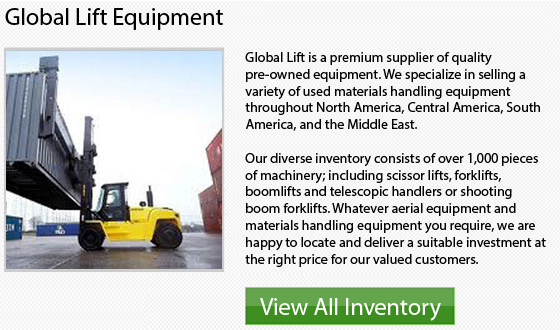
Forklift Controls
Amongst the most common types of machines you will see in any warehouse is a forklift. These all-around machines are comprised of a vehicle together with two pronged forks at the front which are capable of hauling and carrying bulky things.
The standard forklift is designed to work and move in small spaces and is able to lift items to and from high up places. Lift trucks are still extremely dangerous equipment and must be operated in a safe manner at all times, after correct training and certification has taken place.
Take the time to read the owners guidebook after acquiring a new forklift to help you familiarize yourself with the controls. The handbook will feature the particular location of each control and the functions it has. The majority of forklifts have two levers that control the forks. The first lever controls the height of the fork. In order to make the forks go down, you push the lever forward. To be able to move the forks upwards, you simply pull back on the lever.
The forklift's second lever is used to tilt the forks allowing for better weight distribution across the forklift. This tilting action helps to keep objects stable and won't allow items to fall off while driving. Moreover, it helps objects slide off in a more balanced way while unloading.
To be able to tilt the forks back, you pull the lever back and to be able to tilt the forks forward, you just push the lever forward. Some kinds of forklifts are equipped with a third lever which controls the fork width. Each one of these levers is located just to the right of the driver's seat.
Inexperienced operators must take advantage of qualified coworkers who can go over the controls with them. Be certain to do this when the forklift is turned off and not in use. Ask the qualified expert if you have any questions regarding how anything functions.
Observation is often the best way to learn new forklift skills. So take time to observe a coworker demonstrating the function of each control. On hydrostatic forklifts, notice that in order to make the machine go, you use the gas. And if you want to make it stop, you just release the gas pedal. There is no brake on these types of forklifts. There are some hydrostatic models that are equipped with battery powered engines which turn off when the gas pedal is released. They start up when the gas pedal is pushed again.