







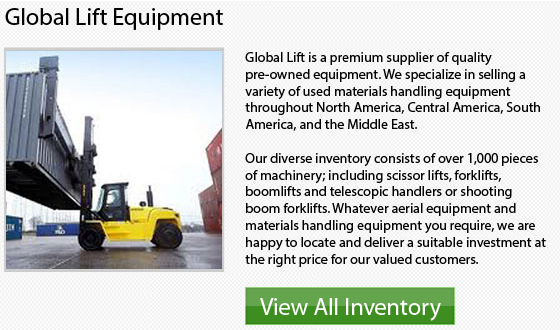
Lift truck operators are normally on the trucks more than 7 out of 8 hours per day in several forklift companies. Operators would be asked to constantly unload and load trucks the whole day. Many of these operators do not need to consult with supervisors really often, neither do they have to deal with paperwork. Occasionally they are doing the same job during the shift for the duration and they don't even have to move the forks to adapt to various cargo. These operators normally find the counterbalanced sit-down models of forklifts much more effective and comfortable.
Maneuvering space depending on the place, some facilities have tons of room in which forklifts and machinery can operate in. In these situations, a 4-wheel electric or engine-powered forklift remains an important player in the warehousing fleet.
On the other hand, other facilities are crammed to capacity. These facilities might have staging areas and shipping departments which offer limited space for lift truck maneuverability. In this specific situation, a 3-wheel electric or stand-up end control lift truck model may seem to be a better alternative.
Depending on your specific use and setting you are working in, you could then determine how to select the right truck and select the correct tire. Next is a brief profile to show you the different kinds of tires offered.
Cushion Tire Trucks - The cushion tire has been specially engineered for use on both concrete or asphalt surfaces. Usually, they are specified for indoor work inside warehouses, manufacturing facilities and distribution centers. Usually cushion tire forklifts are smaller than similar capacity pneumatic units; hence, they typically cost less. This makes their resale value much lower also.
Pneumatic Tire Trucks - Pneumatic tire trucks could go indoors in addition to out on improved surfaces. These surfaces include hard-packed dirt or blacktop and stones. Rough terrain locations like for instance severely potholed lots or plowed fields are not ideal. The trucks are equipped with a bigger frame. Normally, pneumatic tire trucks are more pricey than comparative cushion tire units. With regards to resale, generally the pneumatic units provide higher value. This is in part because of their overall surface versatility and the large amount of maneuvering space they offer.