
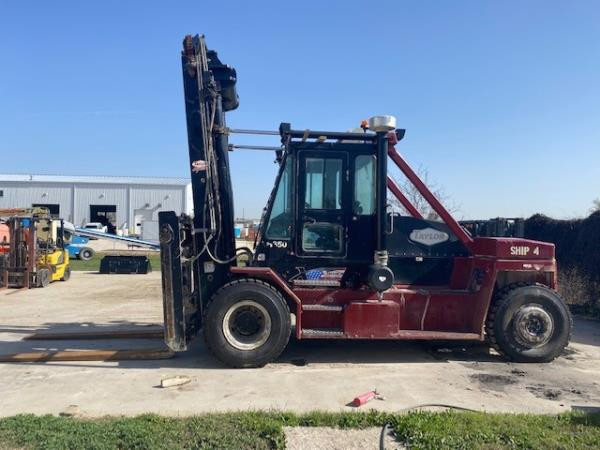


Yale Cushion Tire Trucks
The internal combustion engine cushion unit lift trucks designed by Yale are made and engineered to meet the requirements of specific applications and businesses. The GM in-line 4.3L and 2.4L engines, together with the Mazda 2.2L and 2.0L in-line 4 cylinder engines are very durable, strong and efficient engines. Their design has been specifically made and proven for utmost performance and dependability.
Yale Hi-Vis masts offer excellent construction and unsurpassed visibility due to their original design and construction. Every component has been engineered for fantastic performance and extended, low-maintenance life. These units are really well designed to be a top-player within the business.
Outriggers and Frame
The outrigger and frame of the lift truck must be able to handle extreme environments to be able to safely and efficiently handle the daily stresses it is likely to encounter. The frames built by Yale offer maximum protection to all of the lift truck parts. Additionally, they support the equipment and give it a long life and optimal strength.
Each and every Yale frame has been subjected to extensive laboratory, application and computer testing in order to make certain their machinery satisfy all their clients' needs and expectations. For extra support and capacity, outriggers are welded directly to the frame. These main components must be able to effectively handle the stresses of the most throughput reach truck condition.
Operator's Compartment
One of the most vital components of the Yale trucks is their "Best-in-class" ergonomics. They provide superior comfort, excellent visibility, low effort operation and amazing operator comfort. These important features all add up in order to enable operators to work more efficiently and help operators keep up their production levels during their shift.
Yale engineers particularly focused on a ergonomically designed and spacious operator's compartment. Yale's electric steering further enhances the productivity of the units. This feature offers more accurate steering control with less steering effort and further enhances production. Having an ergonomically friendly design is really important in order to allow operators to remain as productive as they could during the shift.